
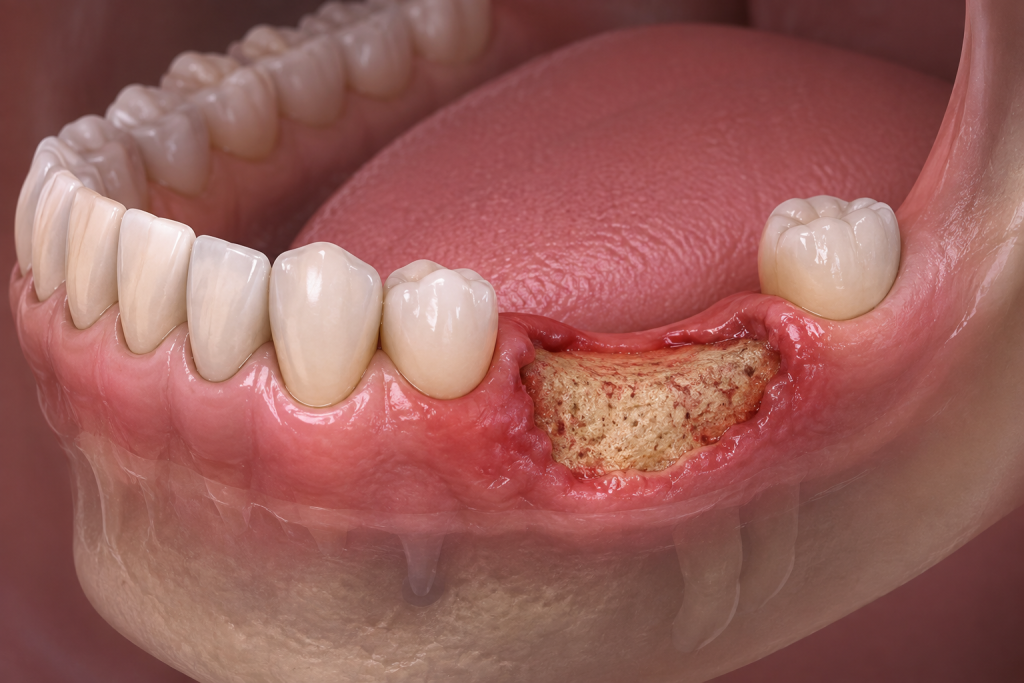
Your physician put you on a bone medication like Fosamax or Boniva. Then your dentist mentioned a word you had never heard: BRONJ. Now you worry that a simple filling could hurt your jaw.
BRONJ stands for bisphosphonate-related osteonecrosis of the jaw. It is a rare condition where a small area of jawbone stops healing and stays exposed after dental work. The risk exists mainly with tooth extractions and oral surgery, not routine cleanings or fillings. For most people taking these pills for osteoporosis, the risk is very low.
I am Dr. Philip J. Cimo, DDS, FAGD. I have treated patients on bone medications at our West Houston dental office for years, and jaw bone health is one of my main clinical focus areas. Most patients who walk in scared leave with a clear plan.
What You Need to Know Before Your Appointment
- BRONJ is a rare jaw complication linked to bone medications called bisphosphonates.
- Your personal risk depends on which drug you take, how you take it, and how long you have taken it.
- Oral pills for osteoporosis carry the lowest risk.
- The safest move is to tell your dentist about your medication before any treatment starts.
- Oral bisphosphonate users face a jaw complication rate of about 1 percent, according to published clinical data.
- The risk rises with IV bone drugs and with therapy lasting longer than three to four years.
- Routine cleanings, fillings, and crowns carry little to no BRONJ risk. Extractions and oral surgery carry the most.
- Never stop your bone medication on your own. That decision belongs to you and your prescribing physician together.
- Tell us your exact medication name and start date before we plan any procedure.
What Does BRONJ Actually Mean?
BRONJ is short for bisphosphonate-related osteonecrosis of the jaw. It happens when a patch of jawbone loses its blood supply and fails to heal, leaving bone exposed through the gum. The American Association of Oral and Maxillofacial Surgeons defines it as exposed jawbone that lasts more than eight weeks in someone who takes these drugs and has had no jaw radiation.
Bisphosphonates slow down the cells that break down old bone. That is exactly why they protect against fractures. The tradeoff is that the jaw heals more slowly after trauma like an extraction. Most of the mouth heals fine. The jaw is simply more sensitive to this effect than other bones.
You may also hear the term MRONJ. In 2022 the American Association of Oral and Maxillofacial Surgeons shifted to that broader label, which stands for medication-related osteonecrosis of the jaw. The change happened because a second drug class, denosumab, can cause the same problem. If your dentist says MRONJ, they mean the same jaw condition. The two terms describe one issue, just under names from different years.
One more point brings relief to many patients. BRONJ is genuinely rare in people who take these drugs for bone density. The condition made headlines partly because early reports came from cancer patients on much stronger doses. Your pill for osteoporosis is not the same clinical picture.
The Bone Medications Tied to BRONJ
Bisphosphonates are the main group tied to BRONJ. They come as pills or IV infusions. The pills for osteoporosis carry the lowest risk. The IV forms, often given for cancer, carry a higher one. Your exact drug and how you take it tell us most of what we need to know.
Common oral bisphosphonates include alendronate (Fosamax), risedronate (Actonel), and ibandronate (Boniva). These are the pills millions of people take weekly or monthly for bone density. Many patients do not realize their bone pill is even a bisphosphonate, so the drug name matters a lot.
The IV drugs include zoledronic acid (Reclast or Zometa) and pamidronate (Aredia). A related shot, denosumab (Prolia or Xgeva), works in a different way but carries a similar jaw risk. Bring the exact name and dose to your visit. Guessing helps no one, and the details change your risk group.
How High Is the Risk, Really?
For most people on bone pills, the risk is very low. Research puts the jaw complication rate for oral bisphosphonate users at about 1 percent. For cancer patients on high-dose IV drugs, the numbers run higher. Some studies report a range from under 1 percent up to about 12 percent. Your case sits somewhere on that scale, and we can place it.
The biggest single factor is how long you have taken the drug. The British Dental Journal notes that risk stays low for the first two years, then climbs with time. How you take the drug matters too. IV drugs build up in bone far more than pills do.
Other things push the number up. Diabetes, smoking, steroid use, and gum disease all raise risk. That comes from a 2025 review in a peer-reviewed jaw surgery journal. Here is the good news. You can change several of these before surgery. That is a big part of why the first planning visit matters so much.
Safe Procedures Versus Procedures That Need Caution
Everyday dental care is safe for almost everyone on bone medication. Cleanings, exams, fillings, crowns, and root canals do not disturb the jawbone in a way that triggers BRONJ. The work that needs real planning cuts into bone: extractions, implants, and gum surgery.
Tooth extraction is the most common trigger for BRONJ. A 2015 study found that extractions can be done in a safe, predictable way, even in higher-risk patients, when they follow set safety steps. The same study found that an infection already in the mouth, not the extraction itself, is often the real driver of trouble.
That finding shapes how we work. We treat active infection first. We keep the surgical site as clean as we can, and we use antibiotics when the case calls for it. Where a tooth might otherwise come out, a root canal can sometimes save it and avoid cutting bone at all. We weigh that choice with care for patients at higher risk.
Stopping Your Medication Before Dental Work
Do not stop your bone medication on your own. This is the most important rule on the page. Any decision to pause therapy belongs to your prescribing physician, who weighs your fracture risk against your jaw risk. For most people on osteoporosis pills, stopping is not needed at all.
The bigger factor is prevention before you ever start these drugs. The American Dental Association and the oral surgeons association both recommend getting your dental health in order before beginning bone therapy when your medical situation allows it. That means handling any needed extractions first, so you finish the deeper work before the medication builds up in bone.
If you are already on the drug, that is fine. We simply plan around it. We talk with your prescribing physician when a procedure calls for it, so both sides of your health line up. Some doctors may pause an IV drug around surgery, while most osteoporosis pills need no change at all. You are not stuck choosing between your bones and your teeth.
Common Questions From Patients on Bone Medication
Can I Still Get a Dental Implant if I Take Bisphosphonates?
Often, yes. Many patients on oral osteoporosis pills can receive implants with proper planning and follow-up. The ADA notes that osteoporosis-dose antiresorptive drugs carry a low jaw risk. High-dose IV drugs and long therapy call for more caution. We assess your drug, your dose, and your history before we recommend implant surgery.
What Are the Early Warning Signs of BRONJ?
Watch for jaw pain, swelling, loose teeth, numbness, or a spot of exposed bone that will not heal. Under the AAOMS definition, exposed jawbone that lasts more than eight weeks is the key sign. Most cases show up in the lower jaw. Call us early if you notice any of these after dental work.
Do I Need to See a Dentist Before Starting Bone Therapy?
Yes, if your medical situation allows the time. Both the ADA and the oral surgeons association recommend getting your dental health in order before you start these drugs. That means fixing decay and handling any needed extractions first. A quick checkup now can prevent a hard decision later.
Getting Assessed at Our West Houston Office
Bone medication management is one of my core clinical areas at our Houston practice, and this is a topic many general dentists send patients elsewhere for. We keep it here. A first visit means a full look at your mouth, a review of your medication history, and a written plan you can actually understand.
We serve patients across West Houston, including Spring Branch, Memorial City, and the Energy Corridor. For anyone who feels anxious about dental work, we offer sedation options, including for patients with complex medical histories. Bilingual English and Spanish care is available, and we accept PPO insurance along with CareCredit and Sunbit financing.
You do not have to figure this out alone. If your doctor has warned you that dental work carries risk, bring that worry to us. Call Brittmoore Dental at (713) 464-1887 to book an evaluation with Dr. Philip J. Cimo. We will review your medication, examine your mouth, and give you a plan that protects both your bones and your smile.