
When people begin researching dental implants, one of their first questions is usually about price. A quick online search for dental implants cost Houston TX may produce dramatically different numbers. One website may promote an implant for a surprisingly low fee, while another may quote several thousand dollars for what appears to be the same treatment.
The problem is that these prices often do not describe the same thing.
Some advertised fees include only the implant post. Others may include the implant, connector, and final crown. Certain estimates leave out imaging, bone grafting, extractions, sedation, temporary teeth, or follow-up care. As a result, patients may believe they are comparing complete treatment costs when they are actually comparing different pieces of the procedure.
At Philip Cimo DDS on Brittmoore Road in Houston, we believe patients deserve a clear explanation of what they are paying for and why. Dental implants can be a significant investment, but understanding the complete cost helps you compare your options more confidently and avoid unexpected expenses later.
What Is a Dental Implant?
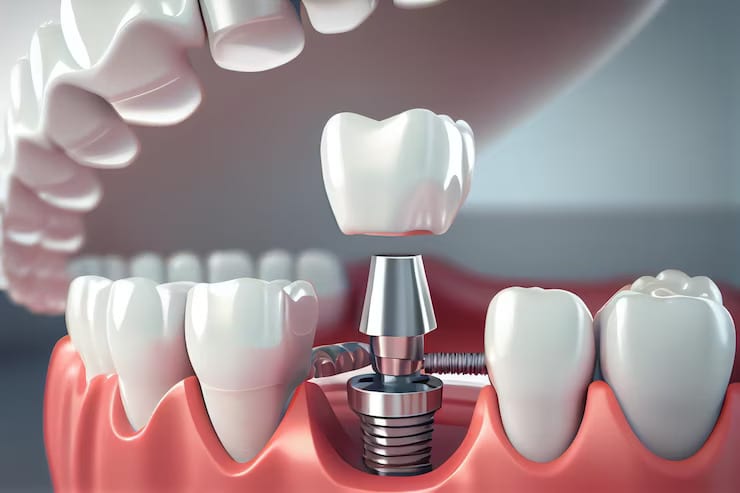
A dental implant is a replacement for the root of a missing tooth. It is typically made from biocompatible titanium and placed into the jawbone. As the area heals, the implant integrates with the surrounding bone and creates a stable foundation for a replacement tooth.
The complete restoration usually has three main components:
- The dental implant placed in the jaw
- The abutment or connector attached to the implant
- The implant crown that replaces the visible tooth
For patients missing several teeth, implants may also support a dental bridge or full arch restoration. In those situations, the treatment may involve multiple implants supporting a larger prosthesis rather than one implant for every missing tooth.
This distinction is important when asking, “How much do implants cost Houston?” The answer depends partly on whether you need one implant and crown, several implants, or a complete implant supported restoration.
How Much Do Dental Implants Cost in Houston?
The cost of replacing a single tooth with a dental implant in Houston commonly involves several separate fees. When the implant placement, abutment, and final crown are all included, the total may be several thousand dollars per tooth.
However, no single estimate applies to every patient. Your cost may be lower or higher depending on the condition of your jawbone, the location of the missing tooth, the type of restoration, and whether additional treatment is needed.
A straightforward case may involve placing the implant into healthy bone, allowing it to heal, and then attaching a custom crown. A more complex case may require removing a damaged tooth, treating an infection, rebuilding lost bone, or creating a temporary tooth during the healing period.
For this reason, an online price should be viewed as a starting point rather than a guaranteed treatment fee. A clinical examination and appropriate imaging are necessary before a dentist can determine the actual scope and cost of care.
The Advertised Price May Not Be the Complete Price
One of the most important things no one tells patients about dental implant pricing is that the lowest advertised number may represent only one part of treatment.
For example, a practice may advertise a low implant fee, but that price may cover only the titanium fixture placed into the bone. The abutment and crown may be billed separately. Imaging, surgical guides, extractions, grafting, anesthesia, and temporary restorations may also carry additional charges.
Before agreeing to treatment, ask exactly what the estimate includes. A complete implant proposal should identify each recommended procedure and help you understand which costs are essential, which are optional, and which might only become necessary under certain clinical circumstances.
Questions worth asking include:
- Does the quote include the implant, abutment, and crown?
- Are imaging and diagnostic records included?
- Is a temporary tooth included if needed?
- Does the estimate include bone grafting or tooth removal?
- Are follow-up visits part of the fee?
- What happens if healing takes longer than expected?
The goal is not simply to find the lowest number. It is to determine which option provides the clearest, safest, and most complete treatment plan.
The Condition of Your Jawbone Affects the Cost
Dental implants rely on healthy bone for support. When a tooth has been missing for an extended period, the jawbone in that area may shrink because it is no longer receiving stimulation from the tooth root.
Bone loss can also occur because of periodontal disease, infection, trauma, or previous tooth removal. If there is not enough healthy bone to support an implant, bone grafting may be recommended.
A small graft placed at the time of an extraction may be relatively straightforward. Rebuilding a larger area of bone can be more involved and may require additional healing time before the implant is placed.
In the upper back portion of the mouth, the sinus may also limit the amount of available bone. Some patients need a sinus augmentation procedure to create adequate support for an implant.
These procedures add to the initial expense, but they may be necessary for long-term stability. Skipping needed foundation work to reduce the price can increase the risk of complications or implant failure.
Tooth Removal May Be a Separate Expense
Some patients already have a missing tooth when they begin implant treatment. Others still have a tooth that is broken, infected, or no longer restorable.
If the tooth must be removed, the complexity of the extraction can influence the total cost. A fully visible tooth may be simpler to remove than a fractured tooth, a tooth with curved roots, or one surrounded by infection and damaged bone.
In certain cases, the implant may be placed during the same appointment as the extraction. In others, the site needs time to heal first. The correct approach depends on bone quality, infection, implant stability, and the location of the tooth.
Immediate placement can sometimes reduce the number of procedures, but it is not appropriate for everyone. The safest treatment sequence should be based on your individual condition rather than on convenience alone.
Advanced Imaging Is Part of Responsible Planning
Traditional dental X-rays provide useful information, but three-dimensional imaging can offer a more detailed view of the jawbone, nearby teeth, sinus spaces, and important nerves.
This technology helps the dentist evaluate bone width and height, choose an appropriate implant size, and plan the angle and position of placement. In some cases, digital information may also be used to create a surgical guide.
Advanced planning may increase the diagnostic portion of the treatment fee, but it can also improve precision and help identify potential concerns before surgery begins.
When comparing implant estimates, consider whether the proposed fee includes the imaging and planning needed for your case. A lower quote that excludes important diagnostic steps may not provide the same level of care as a more complete proposal.
The Final Crown Is Not Just a Cosmetic Detail
The implant itself is only the foundation. The crown is the part you see, use, and clean every day.
Creating a well-fitting implant crown requires careful attention to the bite, the surrounding gum tissue, the neighboring teeth, and the overall appearance of your smile. Front tooth implants can be especially demanding because even small differences in shape, color, position, or gum contour may be noticeable.
The materials used for the crown may also affect the cost. Different restorative materials offer different combinations of strength, translucency, durability, and esthetics.
A custom restoration designed for your mouth will generally cost more than a basic or mass-produced option. However, the quality of the final crown influences not only appearance but also comfort, function, and how forces are distributed when you bite.
Temporary Teeth Can Add to the Investment
Many patients do not want to live with a visible gap while an implant heals. Depending on the location of the missing tooth and the stability of the implant, a temporary replacement may be recommended.
Temporary options may include a removable appliance, a bonded temporary tooth, or a provisional restoration attached to the implant. Each option has different benefits, limitations, and costs.
A temporary restoration is not always necessary, particularly for a tooth toward the back of the mouth. When it is needed, it should be included in the financial discussion before treatment begins.
Sedation and Comfort Options May Affect the Fee
Dental implant placement is typically performed with local anesthetic, which numbs the treatment area. Some patients are comfortable with local anesthesia alone, while others prefer additional support because of dental anxiety, a sensitive gag reflex, difficulty sitting for long appointments, or the complexity of the procedure.
Sedation options may carry an additional fee. The type of sedation appropriate for you depends on your health history, level of anxiety, and planned treatment.
When researching affordable dental implants West Houston, it is helpful to consider comfort options as part of the total treatment experience. The least expensive plan may not be the best personal value if it does not address the factors that help you complete care safely and comfortably.
Experience and Treatment Planning Influence Value
Dental implants involve both surgical and restorative decisions. Proper placement is essential, but the implant must also be positioned so the final tooth can function naturally and be cleaned effectively.
An implant that integrates with the bone but is placed in an unfavorable position may be difficult to restore, may create esthetic compromises, or may be harder to maintain. The final result depends on planning the implant and the replacement tooth together.
The dentist’s diagnostic process, clinical judgment, materials, laboratory partnerships, and follow-up care are all part of the treatment value. These factors may not appear in an online advertisement, but they can make a meaningful difference in the long-term result.
Inexpensive Treatment Can Become Expensive Later
Everyone wants to make responsible financial decisions, and there is nothing wrong with looking for an affordable option. However, the lowest initial price does not always produce the lowest lifetime cost.
An implant placed without adequate planning may develop problems that require corrective treatment. A poorly designed crown may affect the bite, trap food, or make cleaning difficult. Untreated gum disease or uncontrolled health risks may also increase the chance of complications.
Correcting a failed or poorly positioned implant can involve removing the implant, repairing lost bone, waiting for healing, and starting again. This can cost more than completing the treatment properly the first time.
Affordable care should mean transparent pricing, appropriate treatment, durable materials, and realistic payment options. It should not mean cutting out clinically necessary steps.
Dental Insurance May Help, but Coverage Varies
Dental insurance coverage for implants has improved in some plans, but benefits vary widely. Some policies contribute toward the crown but not the implant surgery. Others may cover a percentage of multiple parts of treatment, subject to deductibles, annual maximums, waiting periods, and missing tooth limitations.
A plan may also classify certain procedures differently. For example, extraction, bone grafting, implant placement, and the final crown may each fall under separate benefit categories.
Even when insurance includes implant coverage, the annual maximum may be much lower than the total treatment cost. This means coverage can help, but patients may still have a substantial out-of-pocket responsibility.
Before beginning care, ask for a written estimate and an explanation of anticipated insurance benefits. Remember that insurance estimates are not guarantees of payment. The final decision is made by the insurance company after the claim is reviewed.
Financing Can Make Implant Treatment More Manageable
The total fee does not always need to be paid all at once. Dental implant treatment often occurs in stages, and payments may be divided according to those stages.
Some dental practices also offer third-party financing or other payment arrangements. Qualified patients may be able to spread the cost over a longer period rather than postponing treatment until the entire amount is available.
Health savings accounts and flexible spending accounts may also be used for eligible dental expenses. Because account rules and tax circumstances vary, patients should confirm the details with their plan administrator or financial advisor.
When evaluating affordable dental implants West Houston, consider the monthly impact of treatment as well as the total fee. A well-structured payment option may make comprehensive care more realistic without sacrificing quality.
The Cost of Doing Nothing Is Often Overlooked
The financial conversation should also include what may happen if a missing or failing tooth is not treated.
After tooth loss, nearby teeth may shift into the open space. The opposing tooth may move because it no longer has normal contact. Changes in the bite can make chewing less comfortable and may complicate future treatment.
Bone loss can also continue in the area where the tooth is missing. If an implant is placed later, additional grafting may be necessary. A problem that could have been treated more simply today may become more complex and expensive over time.
Some patients choose a bridge or removable partial denture instead of an implant. These can be appropriate solutions, but they have their own maintenance needs and long-term costs. A traditional bridge may require reshaping adjacent teeth, while a removable appliance may need periodic adjustments, relining, or replacement.
The best financial decision is not always the treatment with the smallest initial fee. It is the option that provides the right balance of health, function, durability, comfort, and affordability for your situation.
Are Dental Implants Worth the Cost?
For many patients, dental implants provide value because they closely resemble natural teeth in function and appearance. An implant does not rely on neighboring teeth for support, and it can help preserve bone in the area where the tooth was lost.
Implants can also improve confidence when smiling, speaking, and eating. Patients who struggle with loose dentures may benefit from implant support that creates greater stability.
However, implants are not automatically the best choice for every person. Your oral health, medical history, bone condition, personal preferences, and budget should all be considered.
A thoughtful consultation should include alternative treatments, not just implants. Understanding the advantages, limitations, maintenance needs, and likely longevity of each option can help you make a decision that fits your priorities.
How to Compare Dental Implant Quotes
When comparing the dental implants cost Houston TX, request an itemized treatment plan rather than relying on a single advertised number.
Make sure each estimate is based on a clinical examination and appropriate imaging. Confirm whether it includes the implant fixture, abutment, crown, necessary extractions, grafting, temporary teeth, and follow-up care.
You should also ask who will complete each part of treatment and how communication is handled if more than one provider is involved. Find out what type of implant and restorative materials are recommended and why.
A trustworthy estimate should help you understand the entire process. You should not feel pressured to choose treatment before your questions are answered.
Why a Personalized Consultation Matters
Two people can be missing the same tooth and need very different treatment. One may have strong, healthy bone and require a straightforward implant and crown. The other may have infection, bone loss, gum recession, or bite concerns that require additional planning.
That is why the question, “How much do implants cost Houston?”, cannot be answered accurately through an advertisement alone.
During an implant consultation, the dentist can evaluate your teeth and gums, review your medical history, assess the available bone, and discuss what you want from treatment. Once this information is available, you can receive a clearer estimate based on your actual needs.
Dental Implant Care on Brittmoore Road in Houston
At our dental clinic in Houston, TX, we understand that cost is an important part of your treatment decision. Our goal is to help patients understand the full scope of care rather than focusing on a promotional number that may not represent the complete procedure.
If you are considering a dental implant in West Houston, a personalized evaluation can help determine whether you are a candidate, what procedures may be needed, and what alternatives are available.
The real cost of dental implants includes more than the implant itself. It includes diagnosis, planning, surgical care, restorative quality, comfort, maintenance, and the ability to use your smile with confidence.
Contact Philip Cimo DDS on Brittmoore Road to schedule an implant consultation and receive a treatment plan based on your health, goals, and individual needs.